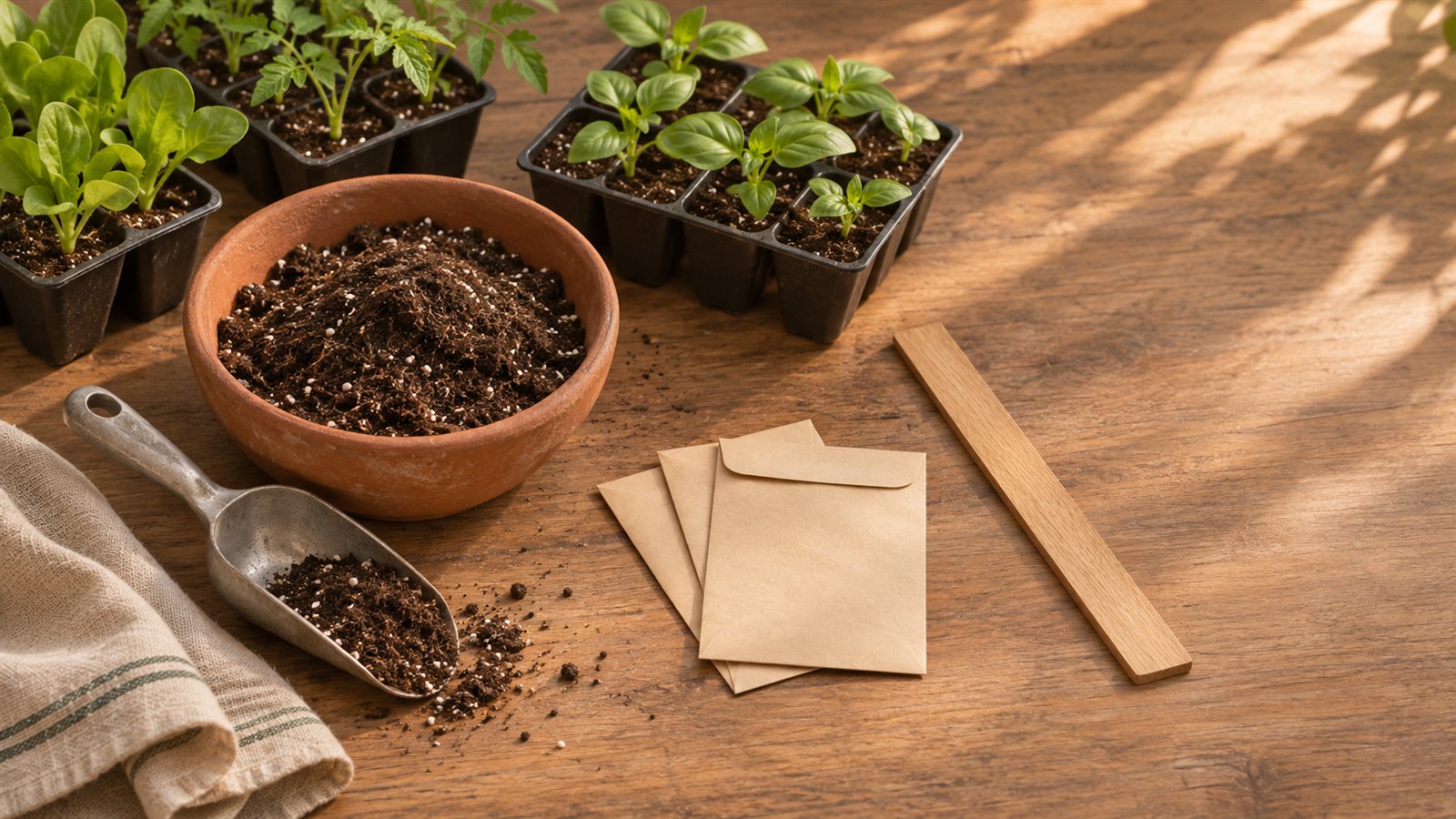
01 / Compost & mulch
Name the problem before opening a bag
Are you trying to improve soil structure, cover bare ground, or address a nutrient need? Those are different jobs. Before buying anything, write down what you have observed and what you hope to change. “Bare soil around a shrub” gives you a clearer starting point than “the garden needs feeding.” Our Garden care guide introduces soil testing and documented product examples; this guide helps separate their purposes.
02 / Compost & mulch
Compost changes the soil
Compost is decomposed organic material used as a soil amendment. It can contribute organic matter and nutrients, and help improve soil structure. Its composition varies with its ingredients and processing. Some compost products also have a guaranteed nutrient analysis; the word “compost” alone does not tell you what nutrients a bag supplies. Maryland Extension: organic matter and soil amendments
That makes compost a choice to evaluate, not an automatic addition. Note what has already been added to the bed and read the current product information. Avoid assuming that more material always means better soil, or that a compost product can replace the complete growing medium in a container. For pots, use the requirements of the plant and the intended container mix as your starting point.
03 / Compost & mulch
Mulch covers the surface
Mulch describes a surface layer. Around trees and shrubs, appropriate mulching helps conserve soil moisture, suppress weeds, and moderate soil temperature. Bark and other organic materials are common examples. Compost can also be used on the surface, so the categories overlap: the material and the job it performs both matter. Maryland Extension: mulching trees and shrubs · Maryland Extension: compost uses
Look at the existing layer before adding more. Keep mulch away from tree trunks rather than piling it against bark. Choose the depth and material using guidance for the plant and site; a tree bed, vegetable row, and small container are different settings. The Maryland tree-and-shrub guidance is useful context, not a universal application recipe. Maryland Extension: avoiding excess mulch
04 / Compost & mulch
Fertilizer addresses a nutrient need
Fertilizer supplies plant nutrients. Whether it is needed depends on the soil and plant, not simply on whether a package is described as organic or synthetic. Maryland Extension recommends using soil-test results and plant needs, and explains that fertilizer does not solve pest, disease, or site problems unless nutrient deficiency is involved. Follow the current label and locally relevant guidance. Maryland Extension: fertilizer basics
A soil report is a useful next step when the nutrient picture is unclear. Tell the laboratory what you intend to grow and follow its sampling instructions. Missouri Extension distinguishes sampling areas with different soil characteristics and provides recommendations for different planting categories. Ask your local Extension service for help interpreting results for your location. Missouri Extension: garden soil testing